Submitted by Ryan Scott
With the recent release of the latest film adaptation of Wuthering Heights, it seemed like a good idea to finally pull the book from my home library and read it. Like many people, it’s one of those classics I’ve been meaning to read for years but have just never got around to it. Nor have I watched any of the many film adaptations released over the past 90 years, and so I went into the book with only vague ideas about the story.
Published in 1847, Wuthering Heights was the only novel completed by Emily Bronte before her death at 30 the following year. Like her sisters Charlotte and Anne, Emily published the novel under a male pseudonym (Ellis Bell), as per the sensibilities of the early Victorian era. It was not published under her proper name until 1850. While it’s become an endless debate which of the Bronte sisters is the better author, it goes without saying that Emily’s sole novel will forever hold an esteemed position in literature. This is due to both its characters and the moods evoked. Even those who have never read it associate names like Cathy and Heathcliff, perceptions of dark romance, and images of blustery Yorkshire moors to the title.

We’re drawn into the narrative through the eyes of Lockwood who visits a weather-worn country manor (Wuthering Heights), introducing us to its landlord, the laconic and Byronic Heathcliff, and to the air of oppressive cruelty and haunting elements that thread the novel through to its conclusion.
Desperate to learn more about the Heights and its occupants, Lockwood turns to Nelly Dean at neighbouring Thrushcross Grange and the narrative proceeds from her perspective years earlier when she was a servant girl at the Heights under then-owner Mr. Earnshaw. Earnshaw had brought the orphaned Heathcliff home from a trip, and young Heathcliff’s dark skin and preferential treatment from Earnshaw saw him become the target of hatred from Earnshaw’s children, Hindley and Catherine, with the latter eventually developing a deep love for the mysterious boy. A lifetime of abuse from Hindley and unrequited love with Catherine, all tangled with the more gentrified lives of the Lintons at the Grange, forces Heathcliff to flee, returning three years later wealthy and pining for revenge and for his lost love. He finds, gains and loses with both. Little happiness is found in the lives of these characters and their offspring, and with its drafty manors, windswept landscapes, tormented souls (living and dead), and the endless air of mystery over the characters’ relationships, Wuthering Heights remains a crown jewel of the Gothic romance novel for a reason.
Every page offers something ethereal. Every word draws the reader into a fevered dreamscape that often crosses over into a violent nightmare. For her first and only novel, Emily Bronte crafted an iconic masterwork. Her early death meant she never got to experience the inspiration born from her work – a sad irony suitable to one of her characters.
Given its age the novel is both florid and poetic, a style which modern readers may, at first, find difficult to step into. Also, its leap-frogging chronology and recycling of characters’ names often add confusion. There is a reason, however, that adherents of Wuthering Heights return to its sumptuous prose time and again: some classics get better when read more than once.
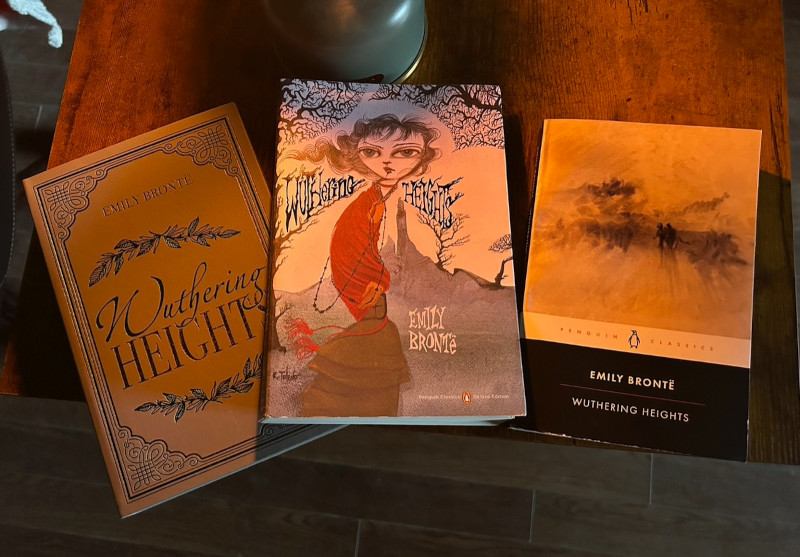
Just as there are many film adaptations, the novel, too, comes in many editions – from affordable paperbacks to beautiful gilt-edged hardbacks – all of which can be found at the Book Hive at 84 Sykes St. N.