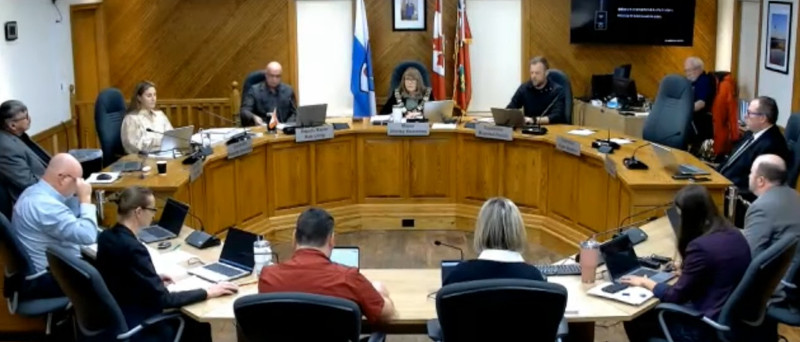
In their first regular meeting after having been installed on November 16, Meaford council gave initial approval to the initiation of the third phase of the municipal Short-Term Rental Regulation Project with a unanimous 6 – 0 vote during the November 23 meeting.
“Phase 3 of the Short-term Rental Regulation (STR) Project Plan asks that Council direct staff to complete reviews of Meaford’s Official Plan and Zoning By-law. Should Council authorize the review, staff will prepare Official Plan Amendments, Zoning By-law Amendments, and a dedicated regulatory Bylaw for Council consideration,” staff advised in their report to council.
In February 2026, council approved a Short-term, Rental Regulation Plan which established a five-phase approach to managing short-term rental units in the municipality.


Phase one of the plan established the STR Registry Pilot Program, while the second phase implemented a municipal Administrative Monetary Penalty (AMP) program, which introduced compliance and enforcement tools. Phases one and two were implemented earlier this year.
“Under the Planning Act, municipalities are responsible for managing land use through Official Plans and Zoning By-laws. Though STRs are presently regulated through the Meaford Zoning By-law, the Planning Act does not prescribe that zoning be the regulator mechanism for this tenure of land,” staff advised council in their report. “Staff are proposing to review the Municipality’s STR provisions within the Meaford Official Plan and Zoning By-law and at minimum move prescriptive zoning provisions to a Regulatory By-law rather than through planning documents alone. Public consultation and staff analysis will reveal how the Official Plan should best reflect STR policies and preserve long-term tenure housing stock.”
During council’s discussion of the agenda item, council was told that there are currently roughly 135 active STR listings within the municipality, while there were just 64 applicants for the registry established by the municipality, 22 of which were deemed to be non-compliant, leaving just 42 properties on the registry currently. There are approximately 5,828 private dwellings in the municipality.
“No matter how you slice it, it’s either less than 2.5 percent of the total residential properties, or based on the registered ones it is less than one percent,” Councillor Darcy Chapman suggested. “If we continue down the phases of this project, based on what staff have already told us, we’re talking about a couple of hundred thousand dollars per year in cost above and beyond any revenue sources.”
Chapman suggested that there will be ‘bad actors’ no matter how much regulation the municipality implements. Chapman said that the municipality already has the tools required to regulate the problems that can stem from an STR, such as noise or property standards violations. Chapman further suggested that the municipality should back away from the planned regulation of STRs.
“There have been a few very loud voices that have taken us down this path, but we need to recognize that we need to represent the entirety of the municipality, not just a handful of people that are upset that their neighbour has an Airbnb,” Chapman told council.
Councillor Tony Bell suggested that the number of properties operating as short-term rentals might be small, but for neighbours of problem properties the numbers aren’t the issue.
“You’ve (Councillor Chapman) said about the impact less than one percent, well, that’s okay except if you’re the person with a family that’s living next door to a belligerent activity, that’s huge,” Bell suggested. “And that’s why we started this. Without rules, without a program, without a policy, it’s the wild west.”
Councillor Bell also had some advice for the newly elected members of council.
“When you talk about one percent, as you go through the next four years, you will take a look at your emails, and you will also come up with a one percent,” Bell told council. “Ninety-nine percent of the people who live in this municipality, we hardly hear from, if ever, but what we do hear from is the one percent. So a lot of the things and a lot of the comments we have, are based upon comments that do come from the one percent.”
Mayor Shirley Keaveney reminded council that there are liability issues for council to consider.
“The other aspect to consider from my perspective, is the liability side of things,” Mayor Keaveney told council. “If we go forward with the registration and a bylaw, then these units, they are businesses, and so they need to have, in my mind, the fire inspections and all of the safety precautions in place because we want our visitors to Meaford, our tourists, to be safe within our municipality.”
Ultimately, council voted unanimously 6-0 in favour of the recommendation (Councillor Vaughan was not present for Monday’s meeting.)
With council opting to direct staff to proceed, the review of Meaford’s Official Plan and Zoning Bylaw will commence in 2027, and the review of the Official Plan and Zoning By-Law relative to STRs can be undertaken concurrently, as staff advised in their report to council.
“Public engagement would be completed through notification in The Meaford Independent and through the Engage Meaford platform. Agency and internal consultation will also be completed and a statutory public meeting will be held in accordance with the Planning Act. Amendments of the Official Plan and Zoning By-Law must conform with the County of Grey Official Plan. An Amendment to the Meaford Official Plan requires approval from the County of Grey,” staff advised in their report.