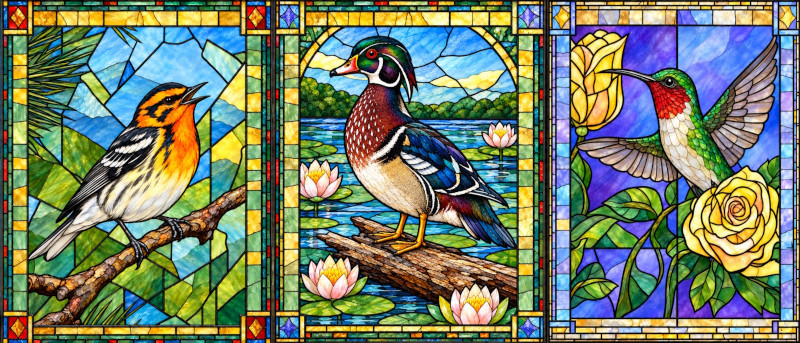
Spring migration grabs everyone’s attention. Migrant birds arrive in flashy breeding colours, singing their hearts out to attract mates and defend territories. Fall is different: birds of many species moult into cryptic non-breeding plumage. Because they are no longer trying to attract mates or defend territories, they are no longer singing, making fall migration easily overlooked — but you don’t want to miss it.
In fall, birds flock together. Some flocks are spectacular, like the huge murmurations of European Starlings seen over fields near dusk. While starlings are not migrating, their flocks often mix with true migrants like Common Grackles and Red-winged Blackbirds. In the forest, mixed-species flocks are trickier to spot. You need to listen to find them. The resident Black-capped Chickadee is usually your tip-off: if you hear one, listen closely. You may catch the subtle chips of migrant birds (warblers, kinglets, and vireos) hiding in plain sight all around you.
In Ontario, fall migration starts as early as August. Shorebirds, like Spotted Sandpipers, are among the first to leave, flying continuously in daylight as well as under the cover of darkness. Cooler weather reduces the invertebrate populations these birds rely on for food; similarly, nectar sources also fade. Ruby-throated Hummingbirds fuel up on late-summer nectar before heading south by day. Though many start their journeys in August, don’t worry if you still see hummers in your yard in September. Cool nights and north winds can stall migration. Just keep your feeders up and enjoy them a little longer.


September marks peak migration for songbirds. Warblers—such as Blackburnian and Yellow Warblers—along with vireos, orioles, tanagers, and flycatchers, fuel up on remaining insects, as well as seeds and grains from late-ripening grasses and flowers. Many are nocturnal flyers, taking off right after sunset to navigate by the stars. They travel in such massive numbers that their movements can be tracked on weather radar via platforms like BirdCast (birdcast.org).
By October, raptors take centre stage. Iconic Red-tailed Hawks and Bald Eagles move south from more northern locations, though some might linger in southern Ontario. Turkey Vultures, on the other hand, are truly summer breeding visitors and reliably leave the province in fall. These soaring birds migrate by day on the last of the season’s warm air currents, called thermals. On the water, Common Loons, Wood Ducks, and migratory populations of Canada Geese gather on lakes and rivers to fuel up on fish or aquatic plants before pushing south in October.
In late October and November, you might notice some arrivals as winter visitors start to settle in fields, forests, and lakes. Arctic-breeding waterfowl, like the Long-tailed Duck, form rafted flocks numbering in the thousands or hundreds of thousands on Lake Ontario. At your backyard feeders, American Tree Sparrows and Dark-eyed Juncos arrive from the boreal forest, ready to keep us company through the cold winter months.
Fall migration awaits. What are you waiting for? Get out your sweaters, grab your binoculars, pack a trusty field guide—such as our book, Colouring Ontario’s Birds—and head outside!
Dr. D.M. Bueher is a researcher, educator, author, and scientist. She holds a PhD in Animal Ecology from the University of Groningen. S.M. Raby is a researcher, military veteran, author, and indie publisher. Together, they co-authored Colouring Ontario’s Birds (Ridgecrest Books, 2025).
You can pick up your copy at The Meaford Independent/Paper+ or at https://bit.ly/OntarioBirds