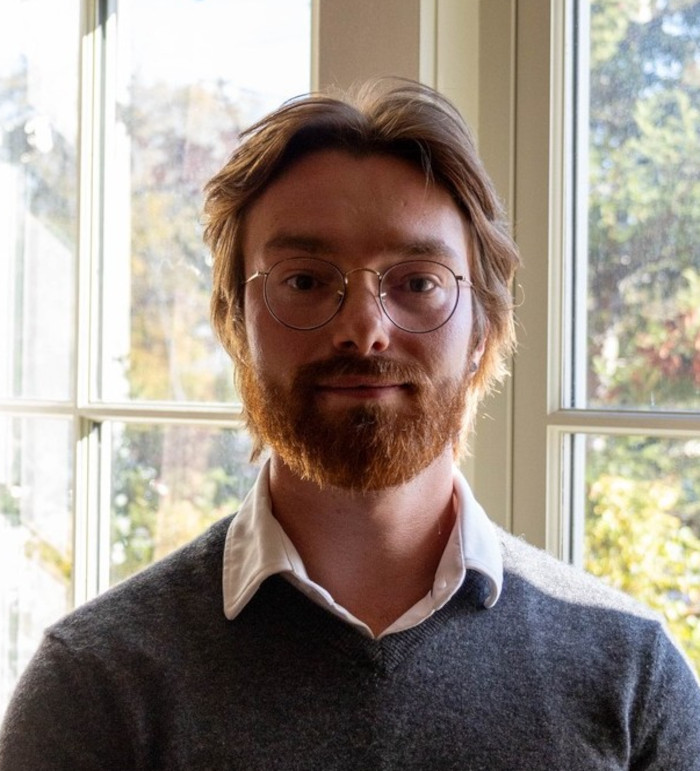
Candidate Name: Eric Ennis
Position Sought: Councillor
Email: eric@ericennis.ca

Phone: 519 868 6534
Bio:
I’m a 31-year-old nuclear indigenous consultations advisor, sitting Meaford Councillor, and homesteader. I grew up in Mississauga playing rugby and heavily involved in Scouts Canada. After studying Psychology at the University of Toronto I worked at a boutique recruiting firm which focused on placing candidates with FDA-regulated businesses across North America. I started my current career during my run in the last election and while studying Economic Development at the University of Waterloo.
I also grew up visiting my Nana in Meaford and fondly remember exploring Steadman’s, the Candle Factory and Factory Outlet, and playing on the wooden pirate ship at Fred Raper park.
After moving to Annan at 24, I brought my lifelong commitment to service with me, contributing to Meaford Rotary, the Institute of Southern Georgian Bay, Meaford Community Gardens, and the Trout Hollow Trail Association as my work, continued education, and family homestead allowed. This year the homestead successfully qualified as a farm business by selling eggs, beef, and garden vegetables!
I’m passionate about bringing my education, work experience, and lessons from my travels across Canada, the US, Caribbean, Asia, and Europe to help Meaford grow while staying true to what makes it Meaford.
Explain your primary reasons for your decision to seek election to Meaford council:
I’m building my career and starting my family in the community I fell in love with as a kid; this community has so much potential to be a prosperous and unified place where people can live excellent full lives.
But in Grade 9 Geography I learned about urban sprawl the Friday afternoon before coming to Meaford for the candle factory sale. This was the first time I took note of development making its way up Highway 10 and it felt like some day Meaford would be just like Mississauga and not the place I loved. I found this distressing. However, in my travels I have seen many ancient places that have found ways to enjoy the things the present has to offer while still feeling deeply connected to, and influenced by, their past. I want to see Meaford do the same while being ready for the future.
It has been a shock to learn just how difficult it is to guide development during my year on council but I am determined to work at it and put in the effort to do my part to help Meaford be an example of how communities want to change over time.
In your view, what should be the top priorities for the council that is elected on October 26?
1) Council must give proper attention to day-to-day responsibilities; the hot issues only come up so often. 2) Closed session items are disproportionately expensive and often the subject of community passions, and must get resolved ASAP. Johnny B’s and SkyDev seem to be important case studies for issues we will likely see in the future and the next council should use them to learn how to do things better. 3) We must absolutely ensure it maintains its good working relationships with staff, fellow council members, other councils, and the county which have put Meaford in an advantageous position. Maintaining it requires a well-balanced combination of professional skills and institutional knowledge at the table. 4) We are out of the no-reserves hole that jeopardized the municipality’s finances but we are now facing work that threatens to burn through them again. Planning and completing maintenance is expensive but it’s cheaper than replacement. 5) The municipality is learning the balance of when to actively support, or get out of the way of, good ideas. We must continue working at this because the only way to ensure our municipality develops the way we want is to do it ourselves.
Explain the role of councillor as you understand it:
In a representative democracy a councillor is entrusted to use the full extent of their own individual ability to understand and navigate problems and people to act on the voters’ behalf. While the basic issues are prescribed by the Municipal Act, the Act does not explain how to balance the myriad factors and variables a councillor must wrestle with. While some issues are clearly not under the municipal division of powers, like housing or childcare, a municipality must still find ways to enable collaboration on good solutions, attract developers or providers, and obtain funding and attention from those that do hold the responsibility. Council members must do this while being active in the community, listening to all the different kinds of people around them, sharing what they can, and teaching others about how things get done. The most difficult part of the role is finding ways to act on what people want you to do when the rules, time, finances, and competing opinions fight you at every step. Ultimately, it is a job of choosing one option from a list of many imperfect, or downright undesirable, options and accepting someone will always be upset with you.